Choosing a tool bag size: 13, 16 or 20 inches and what each really holds

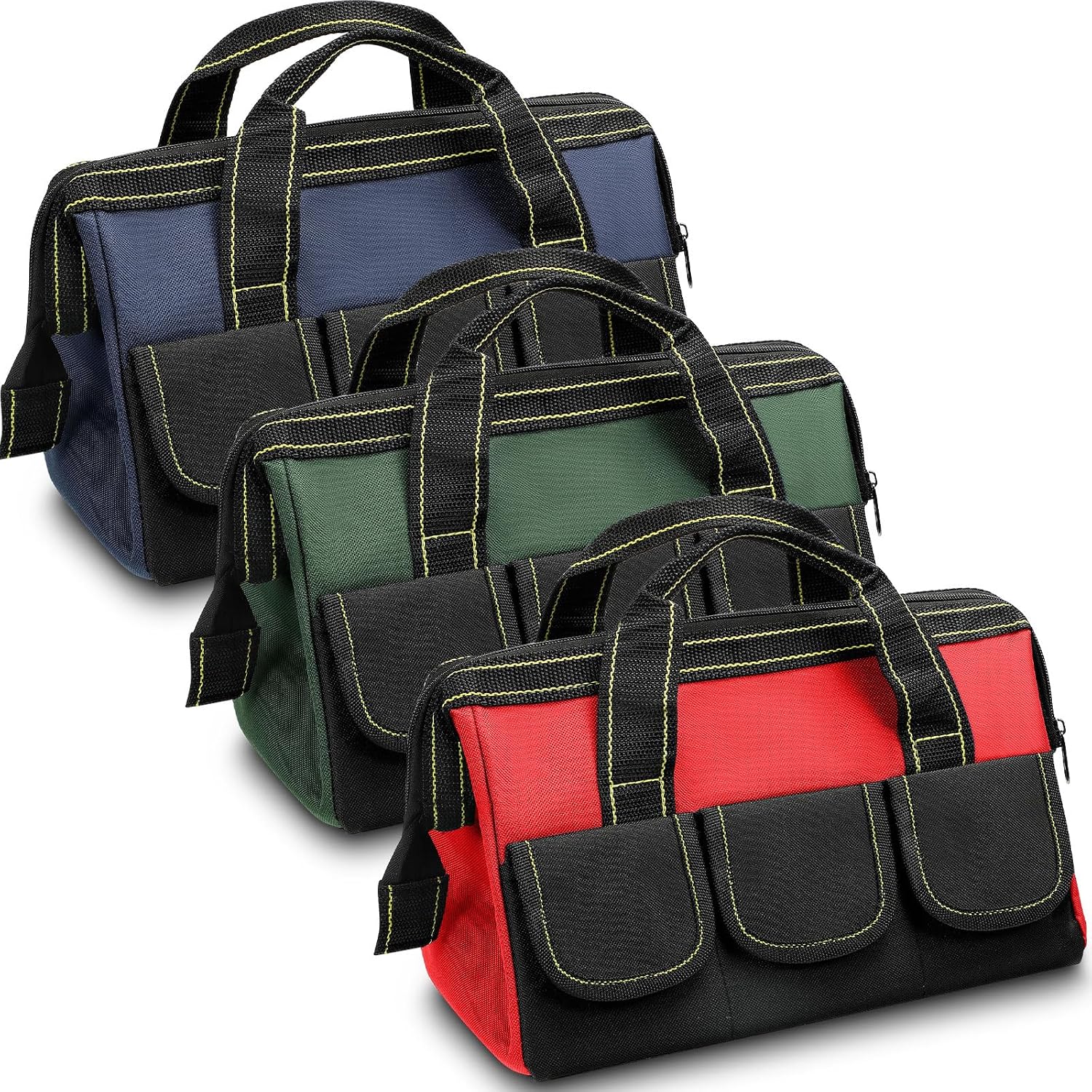
Every trade professional and dedicated DIY enthusiast understands that the right tool can make all the difference, but so too can the right way of carrying it. A well-organised tool bag not only protects your valuable instruments but also streamlines your work, saving precious time spent searching. Choosing the appropriate size is often the first critical decision, influencing both efficiency and comfort throughout your workday.
At Union Square Supply, we see daily how people navigate the options, from compact pouches to heavy-duty totes. The common question revolves around the actual capacity of a 13, 16, or 20-inch wide-mouth tool bag, and what each measurement truly signifies. This guide aims to clarify those distinctions, offering practical insights into what fits comfortably and what scenarios each size best serves, based on hands-on experience with these versatile carriers.
Understanding Tool Bag Sizing
When we talk about a 13, 16, or 20-inch tool bag, we are primarily referring to its approximate length across the main opening or base. This measurement provides a quick reference for the overall footprint of the bag and is a good indicator of the longest tools it can comfortably accommodate. However, the true capacity is also influenced by width, height, and the number and layout of internal and external pockets.
A wider mouth on a bag, regardless of its length, inherently offers better accessibility and visibility to the tools stored within. For instance, a 16-inch wide-mouth bag allows for much easier retrieval than a narrower 16-inch bag with a restrictive zipper. Understanding this length as a primary but not exclusive indicator helps in visualising how your essential kit might lay out inside.
The Compact 13-Inch Tool Bag
The 13-inch tool bag is the quintessential choice for lighter tasks, quick fixes, or highly specialised work where only a specific set of instruments is required. Its compact size makes it exceptionally portable, ideal for technicians who move frequently between locations or for anyone needing to transport a core set of hand tools without unnecessary bulk. It often becomes an indispensable ‘grab-and-go’ solution.
Typically, a 13-inch bag can comfortably hold a selection of common hand tools such as screwdrivers, pliers, a small adjustable wrench, a utility knife, and perhaps a tape measure. It’s excellent for electrical work, computer repair, or as a dedicated bag for a drill and its associated bits. Think precision rather than brute force, and portability above expansive capacity for this size.
Ideal Uses for the 13-Inch Bag
For electricians, a 13-inch bag might carry a multimeter, wire strippers, various screwdrivers, and electrical tape, keeping everything organised for service calls. IT professionals find it perfect for network testing tools, small repair kits, and essential diagnostic devices. It prevents the need to haul a much larger, heavier bag when only a few specific items are needed for the task at hand.
This size also shines as a dedicated bag for a single power tool, such as a cordless drill or impact driver, along with its battery charger and a selection of common bits. It offers protection and makes transport simple without overwhelming the user. Consider it for household maintenance tasks, bicycle repairs, or as a secondary ‘overflow’ bag for tools too frequently accessed to remain in a larger kit.
The Versatile 16-Inch Tool Bag
Stepping up to the 16-inch tool bag introduces a significant leap in capacity while maintaining a reasonable degree of portability. This size is often considered the ‘sweet spot’ for many tradespeople, offering a robust carrying solution for a broader range of tools without becoming excessively heavy or cumbersome. It strikes an excellent balance between generous storage and practical manoeuvrability.
A 16-inch bag can accommodate a more comprehensive selection of hand tools, including larger wrenches, hammers, chisels, and even a small hacksaw. It often has enough space for a compact power tool like a jigsaw or a rotary sander, alongside its accessories. This size is designed for someone who needs a varied toolkit readily available for most day-to-day projects.
The 16-Inch Bag: A Daily Workhorse
This mid-sized bag is particularly popular with carpenters, plumbers, and general maintenance technicians. A carpenter might store a claw hammer, various chisels, a block plane, measuring squares, and a range of fasteners, alongside their power drill. Plumbers can fit pipe wrenches, basin wrenches, cutters, and an assortment of fittings, keeping their essential kit organised and accessible.
Its dimensions allow for efficient organisation with internal pockets for smaller items and a main compartment for bulkier tools. The 16-inch bag is often the primary choice for individuals whose work involves a wide array of tasks but does not require carrying every single tool they own. It represents a practical, everyday solution that balances comprehensive capacity with manageable size.
The Capacious 20-Inch Tool Bag
The 20-inch tool bag is built for those who require maximum capacity and comprehensive organisation for extensive projects or demanding trades. This is the choice for professionals who need to transport a significant volume of tools, including multiple power tools, larger hand tools, and a substantial quantity of supplies. Its larger footprint naturally means it will be heavier when fully loaded.
Expect a 20-inch bag to easily swallow larger hammers, spirit levels, full-sized hacksaws, and multiple power tools like circular saws or reciprocating saws. It provides ample space for accessory cases, safety equipment, and even some spare parts. This bag is designed to be a mobile workshop, ensuring you have virtually every essential tool on hand for any eventuality.
When the 20-Inch Bag is Indispensable
Heavy-Duty Trades
For contractors, builders, or dedicated hobbyists tackling large-scale renovations, the 20-inch bag is often indispensable. It allows for the consolidation of extensive tool sets, reducing the number of trips back and forth to the van or workshop. It’s also ideal for those who work on a variety of projects daily, each potentially requiring a different array of heavy-duty equipment and consumables.
Organising Extensive Kits
Beyond sheer volume, the 20-inch bag offers superior organisational opportunities. Many models feature numerous internal and external pockets, allowing for meticulous sorting of everything from small fasteners to large wrenches. This level of organisation ensures that even with a comprehensive kit, specific tools remain easy to locate, preventing frustration and improving overall efficiency on the job site.
Considering Your Workflow and Specialisation
Ultimately, the best tool bag size is deeply personal and depends entirely on your specific trade, daily tasks, and how you prefer to work. Consider the typical weight you’re comfortable carrying, the types of spaces you work in, and the essential tools that simply must be with you at all times. Often, a combination of bags – a small one for essentials and a larger one for less frequent items – proves most effective.
If you primarily perform light service work, a 13-inch bag might be sufficient. For general contracting or diverse maintenance roles, a 16-inch bag offers the ideal balance. When setting up a comprehensive mobile workstation or tackling major construction, the 20-inch bag provides the necessary capacity. Reflect on your daily routine to make an informed decision that enhances your productivity and comfort.
The short version
- 13-inch bags are perfect for light tasks, specialised kits, or quick repairs, prioritising portability and speed over extensive capacity.
- 16-inch bags offer a versatile balance, ideal for most trades and daily work, accommodating a comprehensive range of hand tools and a compact power tool.
- 20-inch bags are designed for maximum capacity and extensive kits, suitable for heavy-duty trades, large projects, or when a full mobile workshop is required.
Where to go next
Everything discussed here sits under Wide-Mouth Tool Bags in our shop. Delivery and returns are set out on the Shipping Policy and Refund and Returns Policy pages. If something here does not answer your question, ask us directly — we would rather talk it through than have you buy the wrong thing.